Logging a mood takes five seconds. Tap a face, maybe add a note, done. That part is free in basically every app, and it should be, because on its own it barely does anything.
The value shows up later, when you can look back across weeks and see the shape of things. Which days are hard. What you were doing the last time you felt good for a stretch. Whether the thing you suspect is dragging you down actually correlates with the low days or you just remember it that way.
That second part, the part that's actually worth something, is the part a lot of apps put behind a subscription. I think that's backwards, and I'll say why.
You pay for the cure, not the symptom log
Run the logic out. The free tier lets you record how you feel. The paid tier lets you understand it. So the deal is: write down your problems for free, pay a monthly fee to see what they're telling you.
For most software that pattern is fine. Charge for the powerful stuff, give away the basics. But a mood tracker isn't a productivity tool where the premium features are a nice-to-have. The "premium feature" here is insight into your own mental state. Gating that feels less like a pricing tier and more like a tollbooth on the road to feeling better.
I'm not saying the companies are villains. Building good software costs money and subscriptions are a normal way to fund it. I just don't think your own emotional patterns are the right thing to meter.
The subscription pulls the design the wrong way
Here's the part that bothers me more than the price. A subscription doesn't just sit there. It shapes how the app gets built, because the app now has to keep justifying a recurring charge.
That's where the dark patterns creep in. The trial that's easy to start and quietly renews. The "you'll lose your streak" nudge timed for when you're about to cancel. The features sliced thin so there's always one more thing to upgrade for. The notifications that exist to drive engagement, not because you needed reminding.
None of those make the app better at helping you. They make it better at retaining a subscriber. With a wellbeing app, those two goals quietly pull in opposite directions, and the business model decides which one wins.
How being free actually works
The usual reply is: nothing's really free, so what's the catch. Fair. With most free apps the catch is you're the product, paying in attention and data instead of money.
SoulSync is free for a different reason. It's open source, GPL-3.0, with the code public at github.com/Antimatter543/mood-tracker. There's no premium tier because there's no business model that needs one. The whole app is the free version because there is no other version.
That changes what the app is allowed to want from you. There's no subscriber to retain, so there's no reason to engineer guilt about a streak. There's no ad network, so there's no reason to mine your behavior. There's no server holding your data, so there's nothing to monetize on the back end. I broke down the storage side in a mood tracker shouldn't need an account or the cloud.
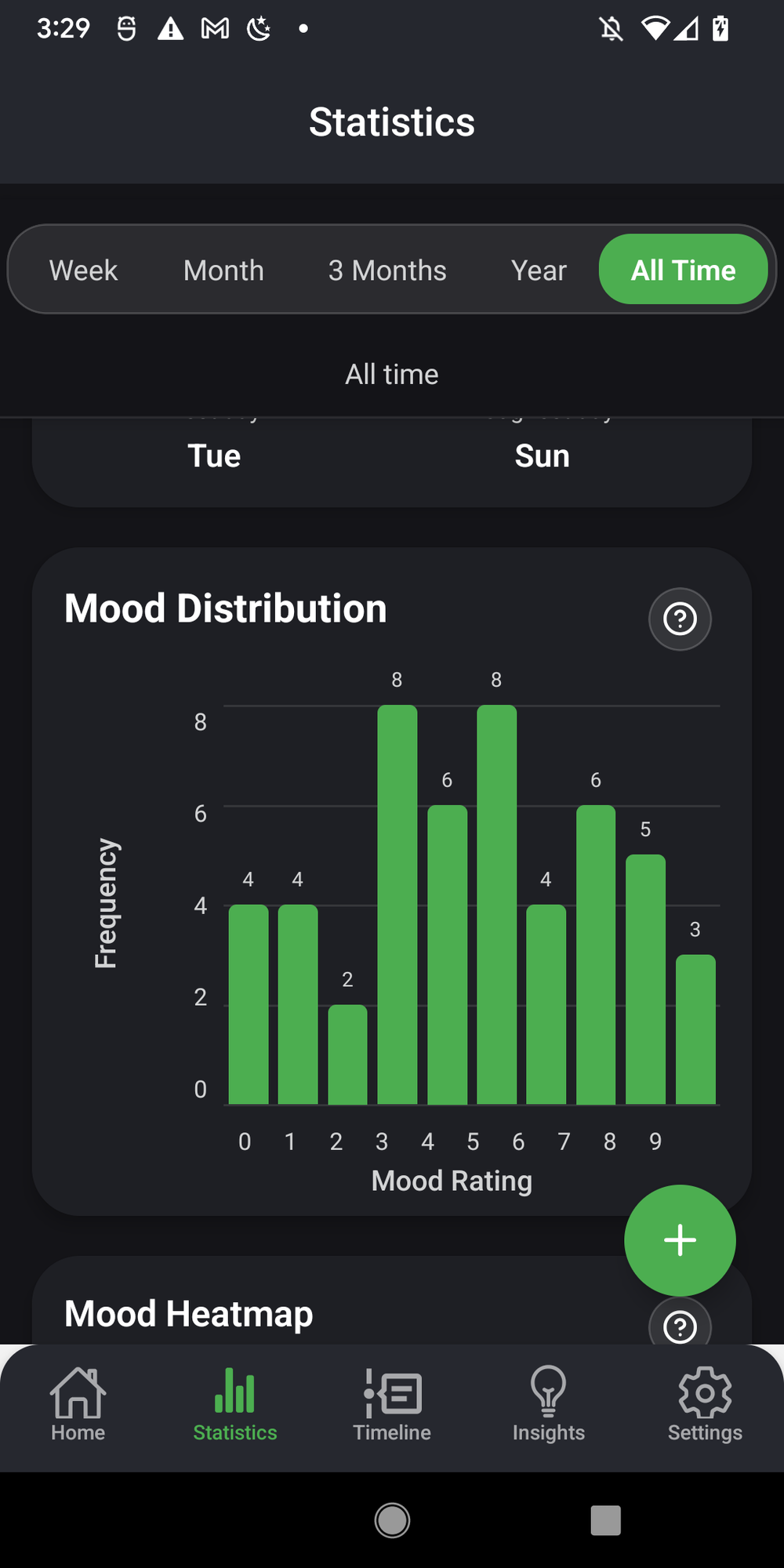
What you get without paying anything
The point isn't a stripped free tier with the good parts dimmed out. The point is the full thing, free. That includes the stats that usually sit behind the paywall:
- Mood trend with an adaptive moving average
- Day-of-week patterns
- A rigorous with-versus-without comparison for each activity
- Month-over-month change and a full-history heatmap
- A plain-language Insights tab that just tells you what it sees
- All five themes, not a couple with the rest locked
No tier above this one is coming later. This is it.
Try it
SoulSync is Android-only for now. Get it on Google Play — full feature set, no card, no trial, no upgrade screen. If you're weighing it against a paid option, I put them side by side in building a free, open-source Daylio alternative.